Chapter 29 — Homeward
The Brigade left Oscarsborg with all the subtlety of a circus fire. The first sun in days burned cold on the snow, painting blue shadows that ran ahead of Dorothy Betts as she stomped down the causeway, her bald scalp daubed in runes and Valkyrie helixes, the warpaint still wet and sharp against the white. Blood crusted her neck and arms in black swirls, some hers, most not. She led the column with her prosthetic gleaming, the toes chipped from where she’d caved in three skulls the night before.
Frank Zill and Elston Fowler hauled the stretcher between them. It was an afterthought of a construction—two birch limbs lashed together with radio wire and lined with a Nazi flag. Benjamin Bradley lay facedown, ass in the air, the rest of him draped over the canvas like a soiled prom king.
Every few steps the makeshift gurney dipped or listed, and Bradley let the world know it.
“My God, could you at least pretend to be careful?” he wailed. “There are bones grinding in my tailbone that the human body was not meant to have.”
“You want us to dump you in the fjord, just say so,” Elston grunted, shifting his grip.
“Keep complaining and I’ll give you a new fracture,” Dottie called over her shoulder, not breaking pace.
Bradley spat a glob of blood onto the snow, then pointed a trembling finger at Dottie’s skull. “You look like an Easter egg from hell.”
Dottie grinned without looking back. “Yeah? Your mom liked it.”
Zill laughed, but it caught in his ribs and he winced. “That’s a good one, Dottie. Gonna miss this kind of banter when they send us back stateside to run laps for some colonel with no sense of humor.”
Ahead, the world opened up into the fortress’s parking yard, a field of ruined trucks, scattered crates, and the bodies of more than a few Nazi dreamers. The air stank of fuel and wet metal. In the center, a captured Opel Blitz squatted in the ruts, its rear gate chained and padlocked. Two Norwegian partisans in ski masks leaned against the fender, holding Stens with all the casual confidence of men who’d shot at something alive. They watched the Brigade approach with the kind of lazy interest reserved for distant relatives at a reunion.
Inside the truck, Dr. Metallgeist made a shape in the window. His head was bandaged, the jaw in a crude sling, one eye swollen shut. A thick rope pinched his wrists behind his back, and a chunk of lumber had been lashed tight between his elbows and knees. Duct tape sealed his mouth. He glared at the Americans with the quiet, poisonous hatred of a man plotting escape or murder—hard to say which.
The Norwegians exchanged a look as Zill and Fowler set the stretcher down next to the truck. The guy with the blue eyes flicked the safety on his Sten and nodded at Zill.
“We thought you were dead,” he said in slow, clunky English.
“Only the good die young,” Zill shot back, then gestured at the captive in the truck. “He try anything?”
The Norwegian shrugged. “Mostly he just stares and drools. Like an angry baby.”
Dottie limped over, inspecting the knot work on Metallgeist’s bonds. “You know, this isn’t half bad,” she said. “Bet you two could teach our MPs a thing or two.”
The Norwegian’s eyes crinkled above his mask. “Maybe if you let us keep your girl here, she could teach our resistance some moves.”
Dottie looked him up and down, then spat on the ground. “You couldn’t handle me, Norway.”
The blue-eyed partisan barked a laugh. “Probably true.”
Bradley moaned from the stretcher. “If anyone cares, I am actively dying. My ass is shattered. I’m losing blood to my ass.”
Elston flicked a chunk of snow into his face. “You’ll be fine. Zill, help me get him upright.”
They manhandled Bradley into a seated position, his teeth bared in agony, but no real damage done. “Goddamn,” he hissed, “I should have gotten hazard pay for this job.”
Zill crouched next to him, voice low. “If you ever mention this to the press, I’ll tell everyone you cried.”
Bradley tried to flip him the bird, but his hands shook too hard.
Beyond the far end of the yard, Jose Rivera limped along the berm with Eien no Tokage at his side. Tokage still moved like a cat, quiet and surgical, but Rivera’s steps were stiff, one ankle ballooned to twice normal. The two talked in the weird, singsong mishmash of lucha and strong style, hands tracing grappling lines in the air. Rivera’s mask was ripped nearly in half, the left side of his face exposed—his eye swollen, cheekbone cracked, but the expression there was pure glee.
“The trick,” Tokage said in English for Bradley’s benefit, “is to let the energy pass through. If you take it all, you break.”
Rivera nodded, then mimed snapping a branch over one knee and looked up hopefully — but sometimes you just want to smash, you know?
Tokage allowed a rare smile. “Smash is good. But first, live.”
Rivera looked at the torn mask, then back at Tokage, and turned one open hand slowly over the other — a question without a voice: did you ever fight someone you didn’t want to beat?
Tokage shrugged. “Always. If you only fight for glory, you die quick. Fight for something else, maybe you die slower.”
Dottie wandered over to them, wiping her face with the back of her hand. “You two done making up moves, or you gonna teach us how to be flexible?”
Rivera grinned, teeth blood red, and tapped first his temple, then his heart.
She rolled her eyes, but the smile was real. “You could have fooled me.”
Before the sound came, Frank slipped away from the yard, up to a low rise above the beach where somebody — Norwegians, Valkyries, God — had stacked a cairn of fortress stone. He stood there a minute with his hand in his pocket. Then he took out Haverchuck’s dog tags, carried across a battle, a betrayal, a grotto, and the end of the world, and hung them on the topmost stone so the chain caught the light. The man had been wrong about the mission and wrong about them. But he had died a soldier, and Frank made sure the ground knew it. He touched two fingers to his brow — the only salute he had left — and walked back down.
From the ridge above, the drone of engines began to rise. Zill looked up, squinting against the sun, and watched as two fat-bellied Royal Navy flying boats dropped out of the cloud over the horizon. The paint was blue, fresh, their sides stenciled with white numbers and the Union Jack. They came in low, props clawing the air with the promise of rescue—or maybe, if you were unlucky, redeployment.
Dottie said, “Well, look at that. Just like in the movies.”
Elston shaded his eyes, watching the descent. “Hope they’ve got cots in there. Or a bar.”
Bradley managed to half-stand, still clutching his tailbone. “First thing I do when we hit London is get a new agent.”
Zill chuckled, then looked around at the battered team. For a second, it was like the end of a really good main event—everyone exhausted, some bleeding, everyone still breathing. Maybe it would all be different back in civilization. Maybe not.
The flying boats settled onto the grey water off the beach, their wakes slapping the shingle, engines blatting as they taxied in. Navy men in life vests leapt out, waving their arms and herding everyone toward the crafts. The Norwegians shoved Metallgeist out of the truck, frog-marched him to the nearest plane. He went quiet, face stone, but you could tell by the way his eyes swept the crowd that he was still thinking, still cataloguing weaknesses.
Rivera hung back and swept a low, courtly arm toward the ramp — ladies first.
Dottie snorted. “You’re all the same under the mask, aren’t you?”
She stomped up the ramp, elbowing past the first two Navy guys. Zill and Elston followed, lugging Bradley between them. Rivera and Tokage came last, pausing at the ramp’s edge.
Rivera looked at the old fighter, then at the ruined fortress behind them, and lifted his chin at the horizon — home?
Tokage shook his head, looking away. “Home is gone. I go east, maybe south. I don’t know.”
Rivera clapped him on the back, gentle, then pressed a printed card into the old man’s palm: MEXICO CITY. NEXT FALL. BRING THE MASK.
Tokage nodded, lips twitching. “I look forward to it.”
The engines roared, the hatches pulled shut, and the world narrowed to the howl of turbines and the sudden, aching relief of survival. Inside, the Brigade crowded onto webbed seats, Zill wedged between Dottie and Elston, the three of them forming an awkward, bruised sandwich.
Across the aisle, Metallgeist sat with wrists lashed tight, flanked by two burly sailors with pistols. He didn’t make a sound, but Zill caught the flicker in his eyes every time the plane banked or dipped, as if he could map a way out if he just paid close enough attention.
Dottie jabbed Zill in the ribs. “You think they’ll give us a parade when we get back?”
He snorted. “Maybe in the next life.”
“Better than nothing,” she said, and settled in.
The sky rolled by outside, blue and empty. The war was someone else’s problem now. The finish they were keeping.
Rivera didn’t hear Tokage approach. One second he was peeling off blood-soaked tape, the next, the old man was standing at his elbow, face as unreadable as ever. The others were wrestling Bradley up the ramp, Dottie cursing at some stubborn Navy medic, so it took Rivera a second to realize Tokage wanted him to follow.
They walked past the battered trucks, past a row of ancient pine, to a spot where the fjord air bit sharper and the world went quiet. Tokage stopped, then reached under his jacket and drew out something wrapped in cloth. Even before Rivera saw it, he knew what it was.
Tokage unwrapped the bundle: a mask, battered and cracked, the leather gone dark and the laces frayed to spiderwebs. It was the color of old bruises, with a splash of red at the mouth and faded dragon scales along the cheeks. Tokage held it out.
“In Japanese,” he said, voice grave, “This belongs to you now.”
Rivera’s hands shook. He pushed the mask gently back toward the old man’s chest — I haven’t earned this. Some refusals need no language at all.
Tokage ignored the protest. He pressed the mask into Rivera’s chest, fingers tight on the fabric, as if passing a living thing. “My fighting days are over. Yours are just beginning.”
Rivera shook his head and tried again to push it back, but Tokage didn’t let go.
“You fought with the heart of a true warrior. The mask chooses. Not the man.”
Rivera bowed, a long, deep tilt that let the wind whip his hair into his eyes. Tokage bowed lower. The mask, pressed between them, felt as heavy as the whole goddamn war.
For a second they just stood, breathing, neither ready to break the moment. Rivera closed his eyes and tried to remember every second of the match in the cave, the feel of Tokage’s grip, the smell of sweat and fear, the way they’d both gone over the edge.
He opened his eyes. Tokage was still there, waiting.
Rivera pressed a fist to his heart, over the eagle, and bowed — a promise that needed no voice.
Tokage’s mouth twitched, almost a smile. “Do not make me regret this,” he answered, then stepped back.
Out on the water, the flying boats ran their engines up again, propellers churning spray and sending loose needles and grit whirling along the beach. The world smelled of fuel and iron and old blood. Tokage looked back at the Brigade, at the Fortress, at the sea beyond. Then he nodded to Rivera one last time.
Without another word, he turned and slipped into the trees. The forest swallowed him in two steps—just a ghost with no name, no country, and no history but the one he’d chosen to give away.
Rivera stood there, mask in hand, until the wind went still.
He ran a thumb over the leather, feeling the scars and the sweat ground in. The eyeholes stared back at him, blank and patient.
At the plane, Dottie shouted his name. “Get your ass over here, eagle boy! Next stop, London!”
He tucked the mask under his arm and jogged up the ramp, last in line but smiling like a man who’d finally figured out the rules. Inside, the team had found seats: Frank and Elston bickering over a pack of cigarettes, Bradley groaning into a Navy blanket, Dottie gnawing the end off a ration chocolate.
Rivera strapped in, the mask pressed to his heart.
Maybe the world would never know what happened here. Maybe it was all just another story, waiting for someone to care enough to listen.
But for now, the finish belonged to them.
The Navy crew had faces like spent bullets. They swept the Americans aboard, hustled Dottie to a jumpseat, then muscled Metallgeist to the deck with zero ceremony. They trussed him tight—wrist to ankle, head to hull. He didn’t struggle; the eyes had gone dead, as if he’d already watched the film of his own defeat.
Frank Zill found his seat next to Elston, whose face was still striped with the blue-black of old war paint. Through the open ramp, the fortress sat hunched on its island, snowlit and quiet, the guns pointed out at the world like broken teeth. Elston just stared.
Frank nudged him. “You miss it already? The power?”
Elston blinked, then wiped a hand across his face. The paint came off in blue streaks. “Not the power,” he said, voice low enough that even Frank almost missed it. “The purpose. I knew exactly what I was for, every second. No confusion. No noise.”
Frank let that sit for a second. “You’re not worried they’ll just give it back to the next monster?”
Elston shrugged. “Doesn’t matter. The world always builds new monsters. But last night—” he hesitated, then smiled, a real one. “I wasn’t one of them. Not for a change.”
Frank looked at the old tribal paint, the scars under the skin, and nodded. “Yeah, I get it.”
Across the cabin, Dottie bullied her way through two Navy corpsmen to check on Bradley. The medics worked around her, rigging a plasma bottle, wrapping his midsection in ace bandage, but Dottie’s running commentary was all he heard.
“Stop whining, you big baby,” she said, yanking a blanket over him. “My last match, I finished the card with a dislocated kneecap and a hangover.”
Bradley didn’t even open his eyes. “You ever hurt your tailbone, Dottie? It’s where all the nerves live. Every time I breathe, I see God.”
She snorted. “You see God, tell him you want your money back.”
Rivera sat next to the door, mask cradled in his lap, watching the snow streak by. He didn’t say anything, just turned the old leather in his hands, eyes far off and impossible to read.
The flying boats came off the water with a rush that felt like taking a punch from a bigger man—sharp, fast, then gone. The propellers bit the air and the world outside vanished into clouds and whiplash sun.
Zill leaned back, shut his eyes, and let the noise settle in his chest. It was the only quiet he’d had in years.
After a while, the Navy guy at the stick started shouting coordinates, but nobody in the back cared. Bradley finally passed out, mouth open, hands balled into the Navy blanket. Dottie used his boot as a footrest and told the medic, “He’ll live. They always do.” The medic just nodded and taped another line to Bradley’s arm.
Elston chewed on the memory of the fight, face smooth and calm. “You think they’ll court-martial us?” he asked, almost to himself.
“Not unless they want to explain to the world why the Nazis had a god belt,” Frank said, and that was the end of it.
The plane banked left, tipping everyone sideways. Rivera looked out, watched the fortress slide under the ice, and pressed the mask to his face, just for a second.
Frank watched him. “You gonna keep that thing?” he asked.
Rivera held it up to the light, turned it, and traced the scars in the leather with one finger. Not just a mask. A story.
Elston gave him a thumb’s up. “Best promo I ever heard.”
Frank smiled, but there was a twist to it. “You think it’s enough? You think any of this mattered?”
Dottie was the one who answered, voice flat. “Only thing that ever matters is if you keep going.”
The rest of the ride was noise: the drone of the props, the occasional Bradley moan, the sound of Dottie retelling the fight to anyone who’d listen. Zill let himself drift, letting the stories pile up in his head, knowing most would never make it out. The good ones never did.
When the plane finally touched down, the English air was thin and wet and alive with radio static. A line of officers waited on the tarmac, faces blank, paperwork ready. They took Metallgeist first, bundled him into a black van, and he never looked back.
Dottie shook the medics, flexed her arm, and limped off the ramp on her own. “Next time, we get a limo,” she said.
Bradley, still groggy, asked, “What time is it?”
Frank checked his watch. “Time to go home.”
Elston and Rivera took the lead, the two of them a matched set of limps and bruises. Frank and Dottie followed, sharing a cigarette and not talking about it.
By the time they reached the debrief hut, nobody looked like a hero. The uniforms didn’t fit, the wounds were ugly, the medals would go to someone else. But Zill didn’t care. For the first time in his life, he felt exactly like what he was: the last man standing, and not by accident.
They sat on the curb, waiting for the bus to London. The world was still out there, waiting to tear itself apart again.
Frank lit another cigarette, passed it down the line, and said, “We should start our own league. No monsters allowed.”
Dottie laughed. “You’d never sell out the house.”
Elston cracked his knuckles. “Bet you I could get a crowd.”
Bradley groaned, “Do I have to wrestle in England?”
Rivera pulled the mask over his face, the old leather fitting just right, and grinned — then spread his hands to take in the road, the bus, the whole grey world, as if to say: anywhere is an arena, amigos. That was always the trick.
The bus rumbled up, and they piled on, each with a duffel, a story, and a brand-new finish to run.
Outside, the sky was still grey, but there was a streak of gold in it now.
The war was still someone else’s problem.
But the finish?
That was theirs.
Chapter 30 — New Champion
Months later, a locker door opened in Scranton, and the mirror inside it found “The All-American” Frank Zill — only this one truly was a soldier.
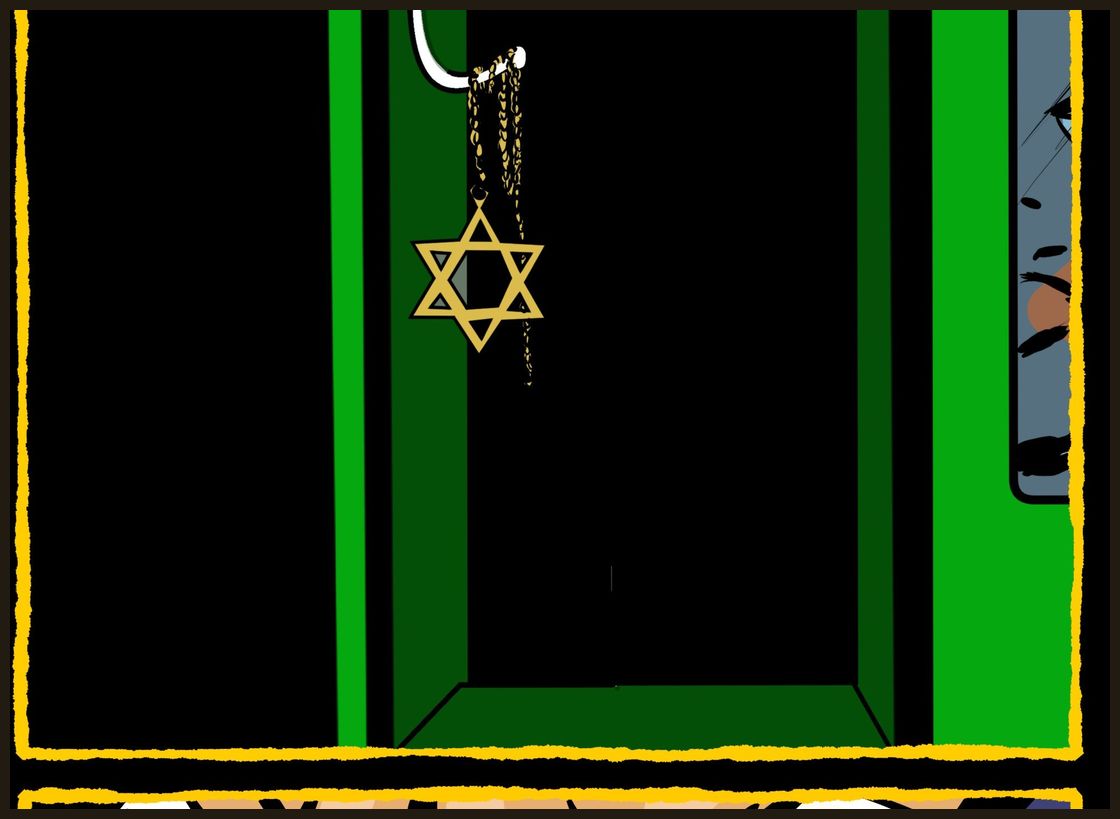
The ritual hadn't changed. It would never change. Tape first, left wrist, three passes, no wrinkles. Right wrist. The boots out of the canvas bag, red leather gone another year softer, laced right over left, every eyelet snug. The chain came out of the inner pocket and this time he didn't wrap it in flannel. He hung the Star of David around his neck, kissed it twice — always twice — and let it lie where anyone could see it.
His father's photograph was taped inside the door, same as ever. Frank looked at it the way a man looks at a mirror that finally shows someone familiar.
“You're not dressed yet,” said a voice behind him, which was a lie, since Frank was clearly dressed.
In the mirror, Elston Fowler's reflection arrived beside his own — half the face paint on, bone white and black and red, the other half still Elston, still the smartest man in any room he entered. He finished a red slash along one cheekbone with the little brush he kept for the purpose, and studied the effect like a banker studying a ledger.
“Ready for this?” Fowler asked.
Frank closed the locker. The hinge had never been fixed. He hoped it never would be.
“Been ready for twelve years.”
Out on Main Street, a boy was sprinting for Shreve's Modern Living, where the console radios in the window were all tuned to the same broadcast: George Jerry informing the wrestling world that an injury sustained abroad — the nature of which remained, he said, classified, and you could hear the straight face — had forced “Breathtaking” Benjamin Bradley to relinquish the All-Star World Wide Wrestling Championship. Tonight, the two number-one contenders would meet for the vacant title.
In living rooms across the Eastern Seaboard, fathers lowered their newspapers.
Ringside, Frank came down the aisle through a wall of sound and stopped at the front row, where a woman in a blue homburg sat with a folded flag in her lap and both feet planted. He kissed her on the cheek.
“Francis,” Ingrid said, clear as a bell, in the accent of a country that no longer existed. “Fix your hair.”
Tonight she knew exactly who he was. Beside her, Sherri Klein — who closed the diner early on wrestling nights now, and dared her regulars to say something about it — handed Ingrid a program and pretended her eyes were watering from the cigarette smoke.
At the curtain, in the gap between the backstage world and the public one, sat a wheelchair. Benjamin Bradley occupied it the way he occupied every piece of furniture, as if it had been waiting all its life for the honor. He was cast from the waist down. He was, somehow, tan. And he wore a brand-new robe — purple silk, gold trim, taste consulted and overruled as usual — with two words stitched across the back in letters visible from the cheap seats:
THE BREATHTAKING DRILLBITS.
Behind the chair, in a matching silk ascot and an expression that dared any living soul to comment, stood Dottie Betts. Her hair was growing back in. She'd decided she liked it better short. She had informed Bradley of the tag team the way generals inform countries of occupations, and Bradley, who had spent a lifetime wanting nothing, had discovered to his lasting confusion that he did not want to argue.
Rivera leaned against the wall beyond them in street clothes and the mask, and gave Frank a slow thumbs-up. Pinned inside his jacket, where a man keeps what matters, were a photograph gone soft with handling and a printed card promising Mexico City, next fall, to a dragon.
The match was a gift. They took it everywhere — the mat, the ropes, one unscheduled tour of the timekeeper's table — and the crowd rode every second of it, six hundred people in a room built for four hundred, chanting for the All-American like the last year hadn't happened, because for them it hadn't. Mid-hold, grinding through a headlock neither of them was really applying, Fowler said, low, “I ever tell you the thing I wanted most out of that crossover was working with you?”
“You told me.”
“Ready to take it home?”
And then they both saw it. George Jerry, at the timekeeper's table, leaning over to whisper in the referee's ear.
Frank started to laugh. He couldn't help it. It came up through the headlock like water through a cracked foundation. “You have got to be kidding me.”
“It is,” Fowler said, with genuine regret, “what it is.”
The whip to the ropes was textbook. The high knee caught Frank clean. And the Borneo Super Splash came off the ropes like something dropped from an airplane, and the referee counted one, two, three, and the Eastern Seaboard territory had a new heavyweight champion of the world.
The locker room afterward went silent when Frank came through the door. Dottie stepped half in front of the wheelchair. Rivera set down his soda. Fowler stood in the middle of the room with the belt on his shoulder and his chin up, paint smeared, ready for the folding chair, the bottle, the locker door off its hinges — ready for all of it, because fair was fair.
Frank looked at him for a long moment.
Then he shook his head, and smiled, and pulled his best friend into a hug that emptied both their lungs.
“The All-American never goes over,” Frank said into his shoulder. “Everybody knows that.”
He stepped back and thumped the gold on Fowler's shoulder with two knuckles, the way you knock on a door you intend to come through.
“But his best friend just did.”
The celebration was six people loud when the knock came. The door opened on two men in matching suits — not Haverchuck and Smith, but cut from the same government cloth, creases you could shave with, and between them a dossier with a stamp Frank recognized the way you recognize your own name.
The room went quiet. Nobody groaned. Nobody reached for a chair.
The Turnbuckle Brigade turned to the door as one, and it was Frank — taped hands, Star of David shining under the bad fluorescent light — who asked it for all of them.
“Where to now?”